By
By During the year in which my first 2 books turned 6 years old, the publishing industry seems to be losing interest in them – and, by extension, me. The older books get, the fewer are the opportunities for readings, signings and festivals. But what, perhaps, the publishing industry doesn’t seem to consider is that with children’s books targeting a narrowly-defined age range, the audience refreshes quickly. Children not yet even born when the first books were published will already have outgrown my early-years text What Can You See? and be able to enjoy the more surreal, anarchic comedy of I Like To Put Food In My Welly and A Zoo In My Shoe.
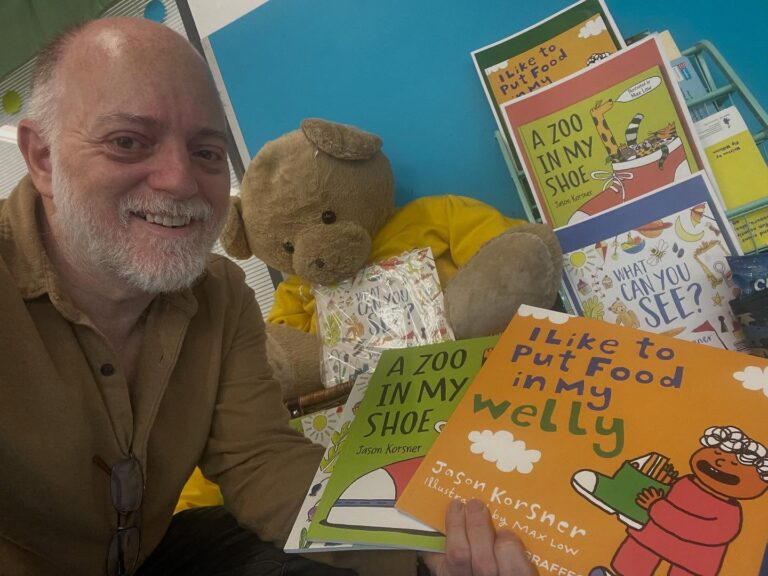
 With this in mind, I started 2025 by offering to visit local primary schools for World Book Day and received more requests than I could manage, starting the year with a rare morale boost for such aging books – and such an aging author. I took my books – and associated cuddly toys, activity sheets, stickers and bookmarks to Our Lady of Lourdes primary school in Finchley in north London, where I read What Can You See? to children from Reception and Year 1 and treated Year 2 and 3 children to a series of activities related to A Zoo In My Shoe.
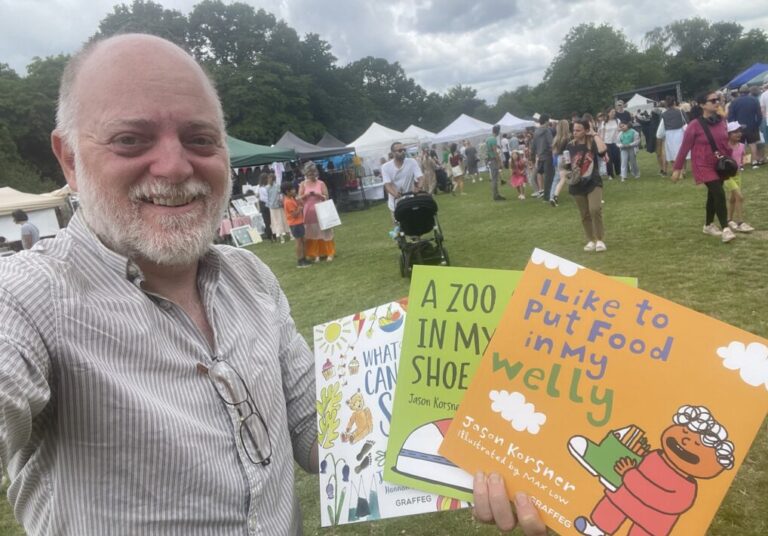
The next reading event of the year came in May, when I was invited to entertain children at the Coppetts Wood Festival, to raise awareness of the conservation efforts for this much loved natural resource. My books joined poetry, morris dancing and clay-making as activities to keep children engaged, while their grown-ups were talking about trees. I even had a visit from the local MP, Sarah Sackman, who said she’d pop back later for a signed copy of one of my books.
 Next came a busy June, with visits to two events I’ve attended in previous years – the local school summer fair and the rather larger East Finchley Festival. At the school fair, I introduced juggling to the show for the first time – luring children in from further afield, only to surprise them with the books, once they came to have a go.
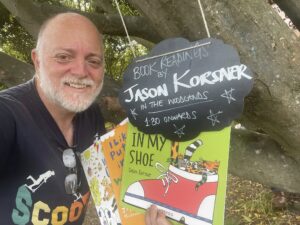
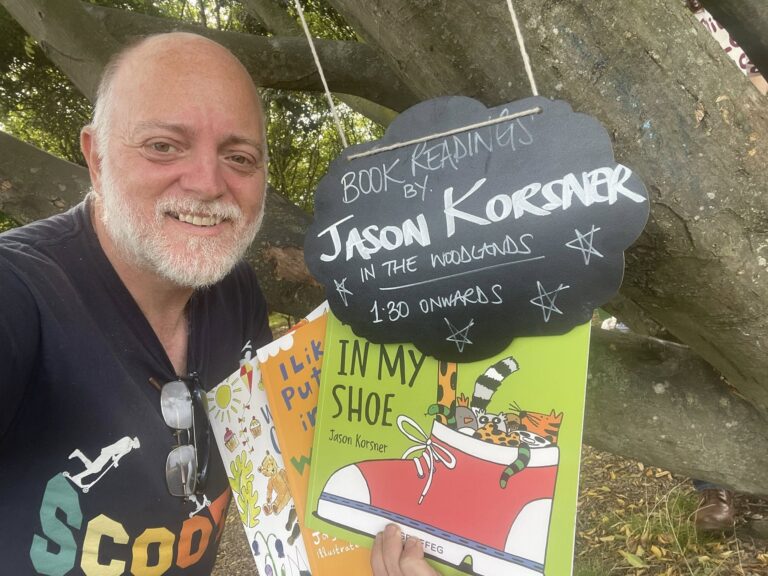
In September, I returned to Clitterhouse Farm in northwest London, where I’ve read at a number of events in the past. This year, I joined local musicians, artists, caterers and a reflexologist at the Folk Fest, where – nestled in the woods – I read all three books to enthusiastic youngsters.
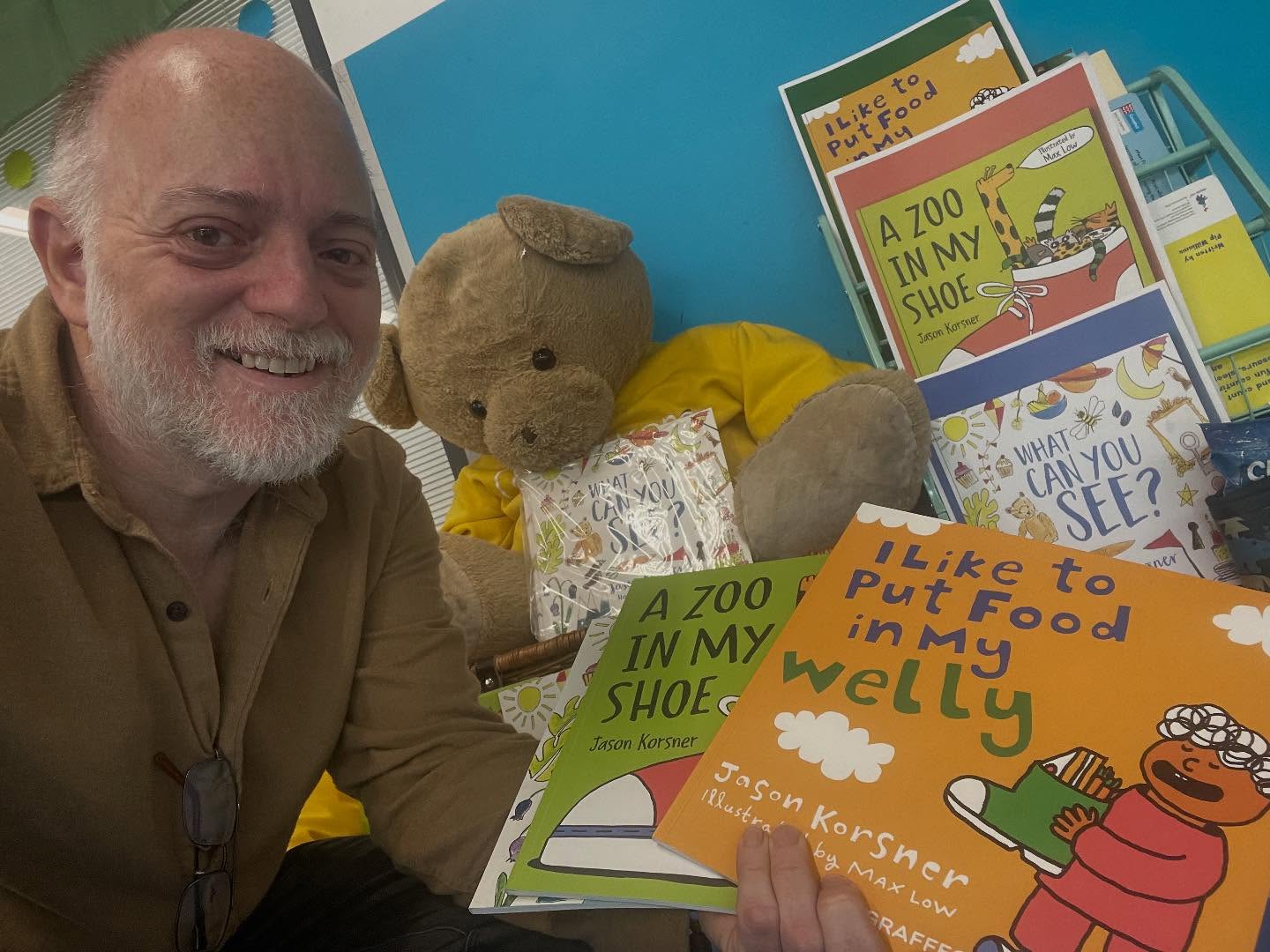 The final formal event of the year, the following month, was taking part in the Baby Zone Barnet family event, where the questions from one children ended up turning the reading into a lesson – for toddlers – in how to write comedy.
Part of the beauty of such reading events is that the response of the children often keeps you on your toes, forcing you to adapt what you do to each specific audience, so even if some children have seen you reading before, no two sessions are ever the same.
The one certain way to make events different from their predecessors is to have new books published but, while that is certainly something I’m still pursuing, it’s less within my control than the contents of my sessions, involving my existing books, while they still have a life of their own.
Aside from the reading events, an important part of an author’s calendar is the networking. Back in March, I attended the London Book Fair, where I had a catch-up with my publisher and discussed potential new projects. And the year ended with a children’s authors, illustrators and agents’ catch-up, where the easiest people to chat to are those who can’t help your career. But hearing about the experiences of other authors can be enlightening – both hearing stories of how you’re not the only one facing your own obstacles to getting some tips that might help you get out of the rut.
But while the goal is to get more books out there, it’s important to make the most of what you’ve already achieved. With that in mind, the aspiration of any children’s author is to create a book with longevity – one that will continue to be enjoyed for generations. The books of Dr Seuss clearly have that enduring quality, along with the more recent works of Michael Rosen or Julia Donaldson, with books from the likes of Oliver Jeffers and Rob Biddulph also likely to be enjoyed by my own children, if not by the generation after them. Indeed, why would future generations be denied such pleasures?
I might, then, conclude that as long as such notions as swimming in a cup of tea, a dancing chimp stepping on your nose, covering your pizza with fleas or putting food in your welly remain funny, it would seem a shame that tomorrow’s or even today’s primary school children shouldn’t be able to enjoy the same laughter as those of just six years ago.
PS: Note teachers – I’m available for World Book Day 2026!
 By
By